

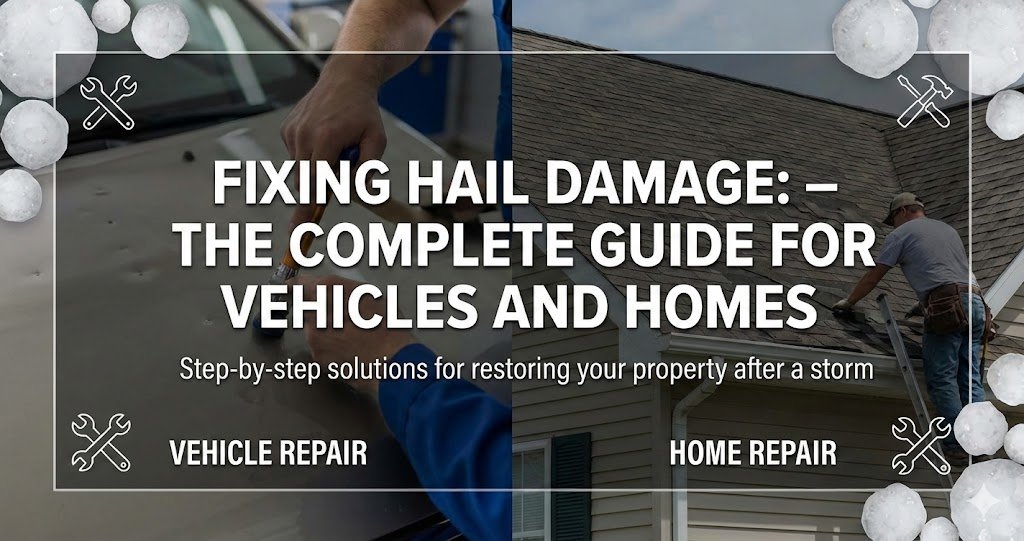
Hailstorms can strike unexpectedly, leaving vehicles, roofs, and outdoor property vulnerable to serious damage. From dents and chipped paint to cracked windows and broken shingles, hail damage can escalate into costly repairs if left untreated. Understanding the process of fixing hail damage is essential for maintaining property value and preventing long-term issues.
This comprehensive guide covers everything from inspecting damage to repair methods, insurance considerations, preventive strategies, and real-life examples. Whether you are a car owner or homeowner, following these steps ensures effective restoration.
Understanding Hail Damage
Hail damage occurs when hailstones hit surfaces at high speed, causing dents, cracks, or breakage. The severity depends on hail size, wind velocity, and the materials affected.
Common Areas Affected
- Vehicles: Roof, hood, doors, trunk, and windshield
- Roofs: Shingles, gutters, siding, and skylights
- Windows & Outdoor Fixtures: Broken glass, garden furniture, or exterior equipment
Signs of Hail Damage
- Small dents on metal surfaces
- Cracked or chipped paint
- Loose or missing shingles
- Broken windows or skylights
- Bent fences or damaged outdoor fixtures
Early detection is crucial to prevent secondary issues such as water leaks, mold growth, or rust formation.
Step-by-Step Guide for Fixing Hail Damage on Vehicles
1. Inspect Your Vehicle
- Park in a well-lit area
- Examine all panels carefully
- Look for dents, scratches, and chipped paint
2. Document the Damage
- Take high-resolution photos from multiple angles
- Note dent size and paint condition
- Keep records for insurance claims
3. Evaluate Repair Options
Paintless Dent Repair (PDR):
- Best for minor dents without paint damage
- Maintains original vehicle finish
Traditional Body Repair:
- Needed for larger dents or damaged paint
- Involves filling, sanding, and repainting
DIY vs. Professional Services:
- Minor dents can be repaired with kits
- Severe damage is best handled by certified technicians to ensure quality
4. File an Insurance Claim
- Contact your insurer promptly
- Submit photos and detailed documentation
- Ask about coverage for hail damage repair
5. Post-Repair Vehicle Care
- Wash and wax to protect paint
- Inspect for hidden dents after repairs
- Consider protective coatings for future hail resistance
Fixing Hail Damage on Homes
1. Inspect Your Roof and Property
- Check shingles for cracks or missing pieces
- Examine gutters, siding, and downspouts
- Inspect windows, skylights, and outdoor fixtures
2. Repair Methods
Shingle Replacement:
- Replace damaged or missing shingles to prevent leaks
- Ensure color and material match existing roof
Gutter & Siding Repair:
- Small dents can be hammered back
- Replace severely damaged sections for long-term protection
Window Repair:
- Minor cracks may be sealed
- Full replacement for shattered panes or extensive damage
3. Hiring Professional Contractors
- Certified roofing professionals provide warranties
- Ensure thorough inspections to avoid hidden issues
4. Insurance Considerations
- Review homeowner policy for hail coverage
- Submit claims promptly to maximize reimbursement
- Keep all invoices and estimates for records
5. Preventive Measures
- Install impact-resistant roofing
- Reinforce windows with storm-resistant glass
- Maintain outdoor structures and landscaping
Tools and Materials for Effective Hail Damage Repair
- Dent repair kits for vehicles
- Roofing hammers, nails, and sealants
- Protective gloves and eyewear
- Paint touch-up kits and fillers
Using proper tools ensures repairs are safe, effective, and long-lasting.
Cost Considerations
Repair costs vary depending on damage severity:
- Vehicles: $50–$300 for minor dents, $1,500+ for major repairs
- Roofs: $500–$3,000 depending on area and materials
- Windows & Siding: $200–$1,000 per unit
Insurance coverage can offset costs, but timely filing and documentation are essential for hail damage restoration.
Case Studies
Vehicle Repair Success
A hailstorm in Oklahoma damaged multiple cars. Using paintless dent repair and insurance coverage, all vehicles were restored efficiently, saving the owners thousands of dollars.
Home Repair Example
In Colorado, a family’s roof and siding were severely damaged. By hiring certified contractors and documenting repairs for insurance, they fully restored their property within a week.
These examples highlight the importance of quick action, proper documentation, and professional assistance in fixing hail damage.
Preventive Measures for the Future
Vehicle Protection
- Park in garages or covered areas
- Use protective hail blankets or car covers
- Apply ceramic coatings to minimize paint damage
Home Protection
- Use impact-resistant roofing and siding materials
- Reinforce windows with storm-resistant options
- Maintain trees and outdoor structures
Insurance Preparedness
- Ensure comprehensive coverage for hailstorms
- Keep property inventories and photos up-to-date
- Review policies annually
Common Mistakes to Avoid
- Ignoring minor dents or roof damage
- Attempting complex repairs without experience
- Delaying insurance claims
- Using unlicensed contractors or low-quality materials
Avoiding these mistakes ensures long-term protection and reduces repair costs.
FAQs About Fixing Hail Damage
1. How can I tell if my car needs professional hail repair?
Minor dents may be addressed with paintless dent repair kits, but larger dents or paint damage require professionals.
2. Will filing a hail damage claim increase my insurance premium?
Some policies may adjust premiums. Always consult your insurer.
3. How long does it take to repair hail damage on a roof?
Repairs typically take 1–5 days depending on severity and weather.
4. Can DIY hail damage repair be effective?
DIY may work for small dents but professional repairs ensure durability and quality.
5. Does insurance cover both home and vehicle hail damage?
Most comprehensive and homeowner policies cover hail damage, but coverage limits apply.
6. Can hail damage lead to long-term problems?
Yes, if untreated, it can cause leaks, rust, mold, and reduced property value.
7. What preventive measures reduce hail damage risk?
Garage parking, protective covers, impact-resistant materials, and regular maintenance help minimize risks.
8. Are paintless dent repairs permanent?
Yes, when done by professionals, PDR restores dents without affecting the vehicle’s original finish.
Conclusion
Fixing hail damage promptly protects your property, prevents further issues, and maintains value. By carefully inspecting, documenting, and repairing damage and leveraging insurance when applicable you can restore vehicles and homes efficiently.
Take action today to assess your property and safeguard it against future storms. Quick attention to hail damage saves time, money, and stress tomorrow.